Small Actions for Big Impact Towards a Thriving Organization
Mariam Hashimi, January 14, 2026
In 2024, RAFT and The SOAR Collective began collaborating to learn more about the elements, characteristics, and norms that allow anti-violence organizations to thrive. Using an appreciative inquiry approach, we chose to focus on what does work at anti-violence organizations; identifying strengths and opportunities for others to learn from. RAFT and The SOAR Collective have been developing resources for anti-violence organizations to identify changes they can make to positively transform their workplace culture.
This process began in the fall of 2024 with a screening survey sent to RAFT listservs, SOAR Collective contacts, and social media. The survey included questions about how supported respondents felt within their organization and whether they believed their colleagues felt the same. Those who were willing to be interviewed and indicated they felt “very well” or “fairly well” supported and believed most of their colleagues would "definitely” or “most likely” respond similarly were contacted to schedule an interview. Interviewees were reimbursed for their time.
Of the 51 individuals who completed the screener survey, 10 individuals met the criteria and were contacted for interviews. Of those 10, five scheduled and completed interviews with RAFT and The SOAR Collective team members.
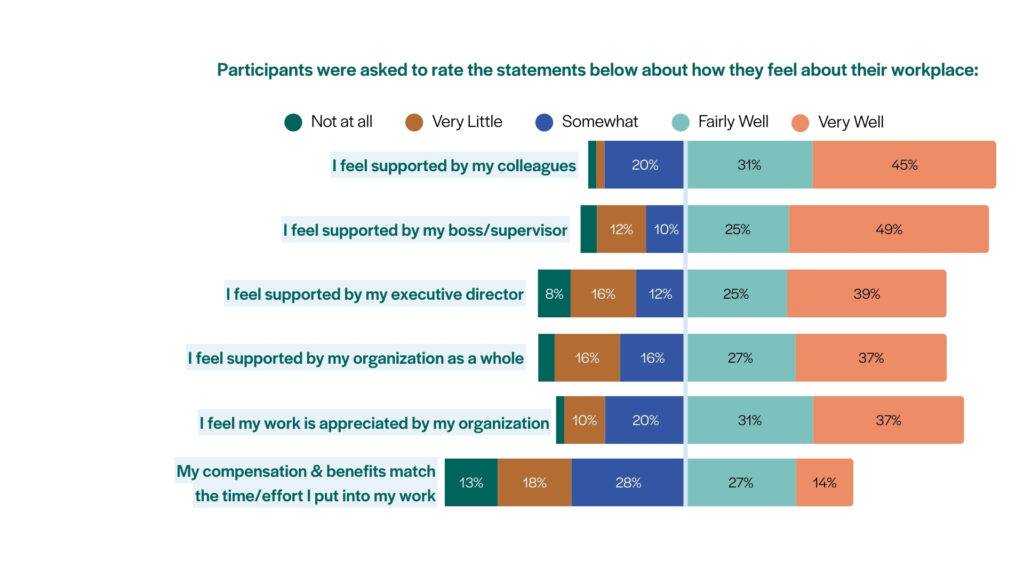
To continue this project into 2025, we interviewed 17 additional advocates, who were referred by previous interviewees. To create a comprehensive picture of a thriving organization, we wanted to collect perspectives from a variety of positions within the same agency.
Wellness can’t be achieved by exercise alone; nutrition, rest, relationships, safety and meaning are all vital to being healthy. We apply a holistic approach makes sense for our bodies, so why would it be any different for an organization of humans?
In collaboration with The SOAR Collective, we analyzed the qualitative data from 22 interviews. Initially, we recognized three themes that were vital to thriving organizations, within the data: Supervisor Support, Transparency and Communication, and Flexibility and Trust. Most of the policies and practices we found in our interviews fell into these three broad categories and continued to guide our gathered recommendations.
Transparency and communication can look like:
- Open Communication from Leadership
- Shared decision-making and transparency
- Access to information about the organization
- Safety and freedom to ask questions and learn from anyone in the organization
Positive organizations show flexibility and trust through:
- Flexibility in where, how, and when work is done.
- Valuing flexible work conditions and autonomy
- Being results-driven, instead of highly structured
- Trust from both supervisors/leadership and colleagues
Key Aspects of Supervisor Support:
- Active listening and support
- Allowing flexible schedules and time off
- Acknowledgement and appreciation
- Seeking input and shared decision making
- Advocacy for staff and their needs
Our most recent report focuses on Transparency and Communication – with small actions and steps you can take to make a big impact on your organization. The first four ideas are below.
Download the full report to read the rest!
1) Peer Support
At the request from staff, multiple agencies started peer support programs. Many interviewees emphasized the value of connection time with peers that is separate from supervision. At one organization, staff are encouraged to meet with their partner twice per quarter, while at another agency therapists meet twice a week to talk about their cases, vicarious trauma, and agency-wide issues.
Peer support can happen informally, too. One advocate shared that after a tough session, she asked her coworkers for help processing vicarious trauma; one colleague volunteered and brought snacks! Simply asking, “do you need anything?” can go a long way.
2) Coworker Connections
Many advocates emphasized how important it is to socialize with colleagues and intentionally spend time not talking about work, getting to know them on a human level. One advocate shared “no matter how busy we are, a significant amount of time is spent checking-in and doing icebreakers.” Other advocates shared that because of intentional frequent meetings “relationships with colleagues are stronger because that time is set aside.”
However, be mindful of your more introverted coworkers when making connection plans and consider alternatives that create space for low-pressure or asynchronous engagement.
3) Community Care
One director emphasized the importance of nurturing relationships with other organizations in the community. Each week, even if she doesn’t need another agency’s services, she calls them to check-in on how things are going. In addition, when they have new staff, they introduce them to community partners. These practices foster strong relationships that are more than transactional, which makes a difference in their small community.
4) Sharing is Caring
One director believes that as soon as she knows information, she needs to thoughtfully share it with staff, to lean into the belief that “people who are impacted the most should be told first.” When there were funding cuts at her agency, she met with staff to discuss what changes they could make that would impact staff the least. These meetings took place on a Friday after staff had finished meeting with clients so they could be off for a few days to react to the news—staff reported this was helpful. She shared “transparency is one of the most helpful things to weather storms.”
At other organizations, directors reported explaining the reason behind decision-making or sharing potential options and considerations with staff before arriving at a final decision. As one executive director described, they have a culture of “let’s just talk about this.”
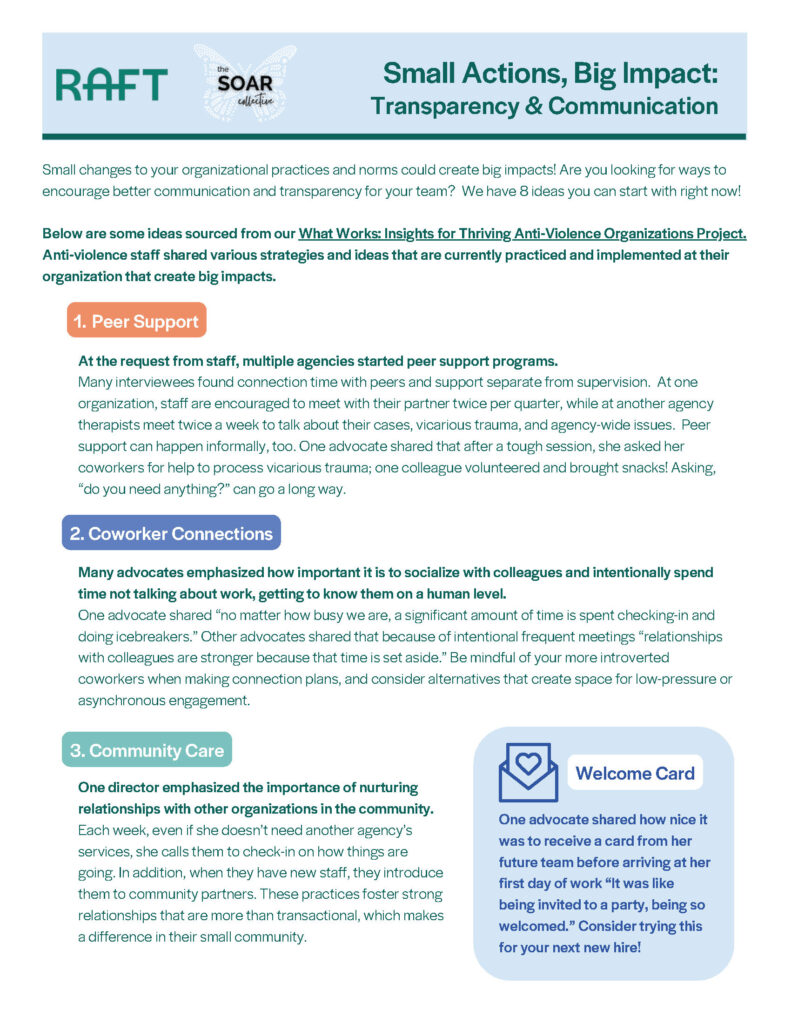
Change doesn’t require a complete overhaul. Often, it starts with small, thoughtful actions that signal trust, respect, and care. Our latest report offers concrete ideas you can begin implementing today to strengthen transparency and communication within your organization.
Discover the rest of our list in our latest report: Small Actions, Big Impact on Transparency and Communication.